How a Dollar Bill Sent Me Down a Rabbit Hole
How a Childhood Fascination Shaped My First Book
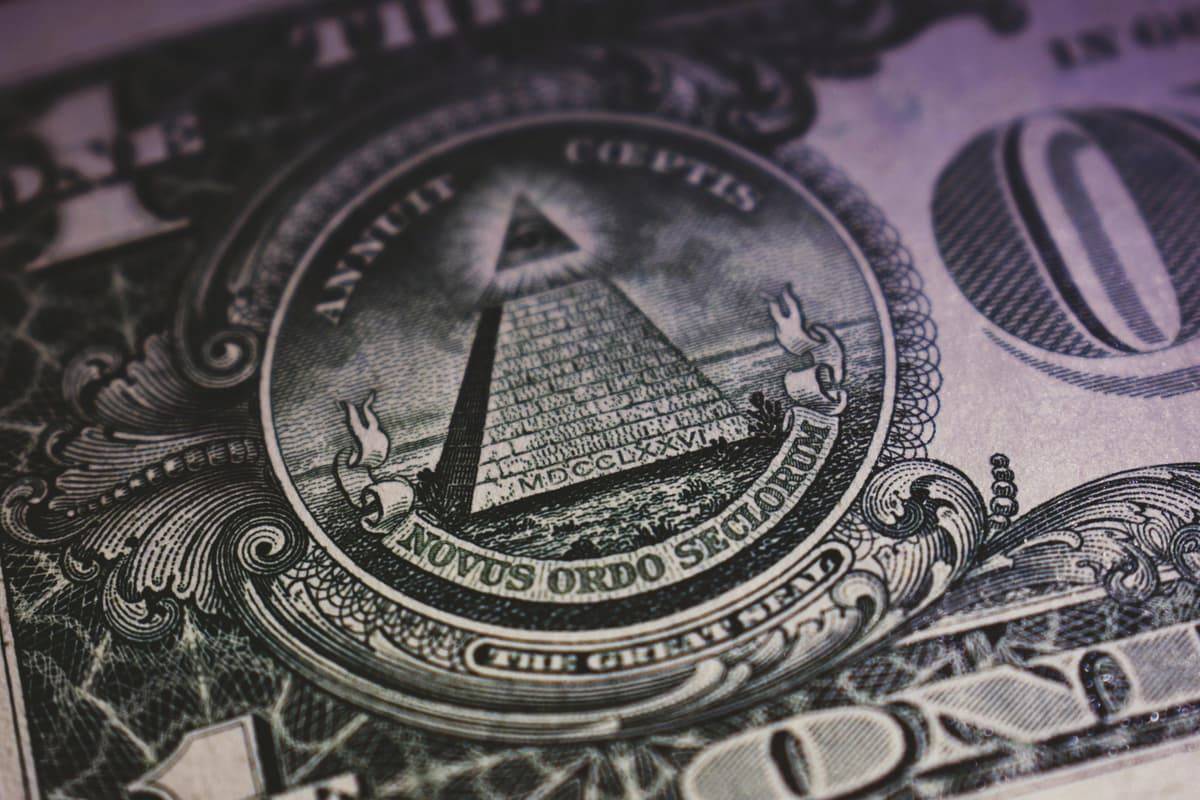
Ever held a dollar bill and wondered why an ancient pyramid with a glowing, all-seeing eye stares back at you? That symbol has sparked theories of shadowy organizations and hidden agendas for decades.
As a kid, that symbol hooked me. Why would our money have such mysterious, almost sinister imagery? When I asked someone who spoke Latin, they translated the phrases underneath: Providence has favored our undertakings and A New Order of the Ages. The phrase new order made my imagination run wild. What did it mean?
Growing up without internet at home, I had to wait for opportunities to explore these questions. My mother, an alum of a local college, let us use their computers. One day, bored with the usual chatrooms, I remembered that odd symbol on the dollar bill and decided to look it up. Typing “eye over pyramid” into the search bar opened a rabbit hole of conspiracy theories. What started as idle curiosity quickly turned into a dive into the hidden world of secret organizations and global plots.
That’s when I stumbled on stories about Nazi bases on the moon, Tesla’s death ray, and, of course, the Illuminati. Every page seemed to unravel another layer of wild speculation. And while most of it felt like fiction, it was hard not to wonder—what if? What if one of these conspiracy theories was real?
My mother’s advice was simple: “People love their stories. Enjoy them, but don’t believe everything you read.” I didn’t take any of it too seriously, but I couldn’t help being fascinated by the creativity of these theories. I never stopped reading about them, each one bigger, bolder, and more bizarre than the last.
So, when I started writing The Vanishing of Jessica Muir, I couldn’t resist the idea of a world where the conspiracy theories turn out to be true. My protagonist, like me, gets pulled into these theories and starts questioning everything he knows about reality. Unlike most of us, he finds out some of those ideas are real.
While building this world, I drew inspiration from some of the most infamous conspiracy theories out there. Here are a few that had a direct influence on the story:
- HAARP — a research project studying the ionosphere, but theorists believe it can control the weather, or even minds.
- ECHELON — a global surveillance program that allegedly monitors all communications.
- Project Paperclip — the U.S. secretly recruited Nazi scientists after WWII. If that one’s real, what else is?
These theories are fascinating on their own, but they get stranger when you start connecting them. In The Vanishing of Jessica Muir, my protagonist stumbles into exactly that kind of thinking: one theory leads to another, and before long, the ground under his feet doesn’t feel so solid.
That all-seeing eye on the dollar bill started something for me when I was a kid. What if some of the conspiracies we laugh off were real? That question never really went away. It just found its way into a book.
This file is part of the Archives
Dead Drop is a monthly letter from inside the story. Get clearance for more.
Join Dead Drop